
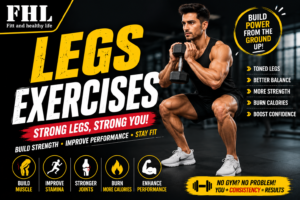
The Ultimate Guide to Building Lower-Body Strength
We’ve all seen the classic gym meme: a massive, muscular upper body perched precariously on top of two spindly, toothpick-like legs. It looks ridiculous, sure, but it also points to a broader truth in fitness. Far too many people skip out on training their lower half because, let’s be honest, it’s hard work.
Training your lower body isn’t just about aesthetics or filling out a pair of jeans. It is the literal foundation of your physical health, athletic performance, and everyday mobility. Whether you are a seasoned gym rat, a weekend warrior, or someone just looking to climb a flight of stairs without gasping for breath, prioritizing legs exercises is one of the best investments you can make for your body.
In this comprehensive guide, we are going to break down everything you need to know about building a strong, resilient lower body. We’ll look at the anatomy, the benefits, the ultimate movements, and how to program them without burning out.
The Anatomy of the Lower Body: What Are We Actually Training?
Before we jump into the movements, it helps to understand what’s going on under the hood. Your lower body is made up of some of the largest and most powerful muscles in your entire existence. When you perform legs exercises, you are primarily targeting four major muscle groups.
1. The Quadriceps (Quads)
Located on the front of your thighs, the quads are a group of four muscles responsible for extending (straightening) your knee. Every time you push off the ground, jump, or walk down a hill, your quads are doing the heavy lifting.
2. The Hamstrings
Running down the back of your thighs, the hamstrings oppose the quads. They are responsible for bending your knee and extending your hips. Strong hamstrings act as a crucial braking system for your body, protecting your joints during sudden stops or directional changes.
3. The Glutes
Comprising the gluteus maximum, medium, and minimum, your butt is the powerhouse of your body. The glutes drive hip extension, stabilization, and rotation. If you want to run faster, lift heavier, or simply protect your lower back, you need firing glutes.
4. The Calves
Made up of the gastrocnemius and soleus, your calves sit on the back of your lower leg. They are responsible for plantarflexion (pointing your toes) and play a massive role in ankle stability and explosive movements like sprinting and jumping.

Why You Can’t Afford to Skip Leg Day: The Hidden Benefits
Let’s be real: a heavy set of squats is infinitely more exhausting than a set of bicep curls. Because legs exercises recruit such massive muscle groups, they require a tremendous amount of energy. But the payoff is unparalleled.
Boosted Caloric Burn and Metabolism
Because your leg muscles are so large, training them demands a massive amount of energy. Your heart has to work double-time to pump blood to your lower extremities. This results in a significantly higher caloric burn during and after your workout compared to smaller muscle groups. If fat loss or metabolic health is your goal, your legs are your best friend.
Enhanced Athleticism and Functional Power
Think about almost any athletic movement: throwing a punch, swinging a golf club, sprinting for a ball, or jumping for a rebound. None of these movements start in the upper body. Power is generated from the ground up. By building a solid foundation through targeted lower-body work, you increase your force production, making you faster, more agile, and more explosive.
Injury Prevention and Joint Longevity
Weak legs put an undue burden on your joints, particularly your knees and lower back. When your glutes and hamstrings are underdeveloped, your body compensates by shifting stress onto your lumbar spine. Strengthening the muscles around your hips, knees, and ankles creates a natural armor that protects your joints from the wear and tear of daily life.
The Holy Trinity of Lower-Body Movements
If you were stranded on a deserted island and could only do three legs exercises for the rest of your life, these are the ones you should choose. They are compound movements, meaning they recruit multiple joints and muscle groups simultaneously, giving you the biggest bang for your buck.
1. The Squat (The King of Exercises)
There is a reason the squat is considered foundational. It simulates a movement we do dozens of times a day—sitting down and standing up.
-
Primary Muscles Targeted: Quads, Glutes, Core.
-
How to do it right: Stand with your feet shoulder-width apart, toes slightly turned out. Initiate the movement by sending your hips back, as if sitting in an invisible chair. Keep your chest proud and your spine neutral. Drive through your heels to return to the starting position, ensuring your knees do not cave inward.
2. The Deadlift (The Ultimate Posterior Chain Builder)
While the squat is quad-dominant, the deadlift is the king of the posterior chain (the back of your body). It teaches you how to pick up heavy objects safely using your hips rather than your spine.
-
Primary Muscles Targeted: Hamstrings, Glutes, Lower Back, Upper Back.
-
How to do it right: Stand with your feet hip-width apart, the barbell over the middle of your feet. Hinge at your hips, bending your knees slightly, and grip the bar. Flatten your back, engage your lats, and drive the floor away with your legs as you stand up straight.
3. The Lunge (The Unilateral Savior)
Human life happens one leg at a time. Walking, running, and climbing stairs are all unilateral (one-sided) movements. Lunges help iron out muscle imbalances between your left and right sides while building incredible stability.
-
Primary Muscles Targeted: Quads, Glutes, Core, Calves.
-
How to do it right: Take a large step forward. Lower your hips until your back knee is hovering just above the floor and your front thigh is parallel to the ground. Push powerfully off your front foot to return to the start.
A Comprehensive Directory of Effective Legs Exercises
To build a well-rounded physique and avoid training plateaus, you need variety. Here is a curated list of the most effective lower-body movements, categorized by their primary focus.
Quad-Focused Variations
If you want to build strength on the front of your legs or improve your knee stability, look no further:
-
Front Squats: By placing the barbell across the front of your shoulders, you shift the center of gravity forward. This forces your torso to stay upright and places an intense load directly onto the quads.
-
Bulgarian Split Squats: Warning: these are notoriously brutal, but incredibly effective. Elevate your back foot on a bench and perform a single-leg squat with your front leg. It isolates the quad and glute while stretching the hip flexors.
-
Leg Press: A machine-based alternative that removes the stability requirement of a free-weight squat, allowing you to safely overload your quads with heavier weight.
Hamstring and Glute-Focused Variations
A strong backside keeps your posture upright and your lower back pain-free.
-
Romanian Deadlifts (RDLs): Unlike a standard deadlift, you start from a standing position and lower the weight by pushing your hips as far back as possible while keeping your legs mostly straight. You will feel an intense stretch in your hamstrings.
-
Hip Thrusts: popularized by sports scientists as the absolute best movement for glute hypertrophy. Back on a bench, barbell across your hips, drive your pelvis toward the ceiling and squeeze your glutes at the top.
-
Glute-Ham Raises (GHR): A bodyweight or weighted movement using a specialized bench that forces your hamstrings to work eccentrically to lower and pull up your torso.
Calves and Mobility Enforcers
Don’t neglect the lower half of your lower half.
-
Standing Calf Raises: Best for targeting the gastrocnemius muscle. Ensure you get a full stretch at the bottom and a hard contraction at the top.
-
Seated Calf Raises: Because your knees are bent, this variation isolates the deeper soleus muscle.
-
Tibialis Raises: Lifting your toes toward your shins. This strengthens the front of your lower leg, which acts as a shock absorber and is excellent for preventing shin splints.
Sample Workout Routines for Every Fitness Level
Now that you know the movements, let’s look at how to structure them into an actionable routine. Depending on your experience level, choose one of the blueprints below.
The Beginner Foundation Routine
If you are new to working out, focus on mastering form and building consistency. Perform this routine once or twice a week.
Exercise Sets Reps Rest Time Bodyweight or Goblet Squats 3 10-12 60-90 seconds Dumbbell Romanian Deadlifts 3 10 60-90 seconds Reverse Lunges (per leg) 2 8-10 60 seconds Standing Calf Raises 3 15 45 seconds 
The Intermediate Strength & Size Routine
For those who have been training for 6 months to a year and want to add noticeable muscle definition and power.
Exercise Sets Reps Rest Time Barbell Back Squat 4 6-8 2-3 minutes Barbell Hip Thrust 3 8-10 90 seconds Bulgarian Split Squat 3 10 (each) 60 seconds Lying Leg Curl Machine 3 12 60 seconds Seated Calf Raises 4 12-15 45 seconds Common Mistakes to Avoid (Save Your Joints!)
Because lower-body training involves heavy loads and complex mechanics, it is easy to let ego get in the way of proper form. Keep an eye out for these common pitfalls:
The Ego Depth: Quarter-squatting a massive amount of weight might look cool to the untrained eye, but it severely limits your muscle growth and places immense stress on your knees. Drop the weight, hit parallel depth (where your hips drop level with your knees), and reap the real benefits.
-
Valgus Collapse (Knees Caving In): When pushing out of the bottom of a squat or lunge, your knees should never cave inward toward each other. This places immense strain on your ACL. Actively think about driving your knees outward so they track in line with your pinky toes.
-
Rounding the Lower Back: During deadlifts or RDLs, a rounded spine is an open invitation for a herniated disc. Keep your shoulder blades packed, your chest engaged, and your spine perfectly neutral. If you can’t go lower without your back rounding, stop there—that is the limit of your current flexibility.
Recovery: How to Survive the Post-Leg-Day Soreness
We’ve all experienced Delayed Onset Muscle Soreness (DOMS) after a brutal leg workout—that specific type of soreness where sitting down on a toilet seat feels like an Olympic sport. While you can’t eliminate it entirely, you can manage it.
-
Hydration and Electrolytes: Your muscles need water and minerals to repair efficiently. Drink plenty of water and replenish sodium and potassium post-workout.
-
Active Recovery: Sitting on the couch all day after leg day will actually make the stiffness worse. Go for a light, 20-minute walk or do some easy cycling. Increasing blood flow to the damaged muscle tissues accelerates the healing process.
-
Protein Intake: Ensure you are consuming enough dietary protein to support muscle protein synthesis. Aim for high-quality sources like chicken, beef, fish, eggs, or plant-based alternatives like lentils and tofu.
Final Thoughts: The Journey Starts From the Ground Up
Embracing legs exercises is a mindset shift. It requires stepping out of your comfort zone, embracing discomfort, and prioritizing systemic, long-term health over quick mirror fixes.
When you build a strong lower body, you aren’t just building bigger muscles; you are building a more durable framework for your life. You are protecting your joints, accelerating your metabolism, and unlocking physical capabilities you might not have known you possessed.
So, the next time you look at your workout calendar and see leg day staring back at you, don’t dread it. Lace up your shoes, step up to the rack, and remember that strength is built from the ground up.
What is your absolute favorite movement for training your lower body, or which one do you struggle with the most?
-
-