
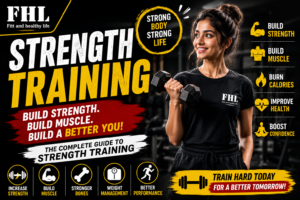
If you’ve ever wanted to become stronger, healthier, and more confident, then strength training is one of the best fitness methods you can choose. Whether you’re a beginner who has never lifted weights before or someone looking to improve overall fitness, adding strength training to your weekly routine can completely transform your body and your lifestyle.
Many people believe strength training is only for bodybuilders or athletes, but that’s a common misconception. In reality, it’s beneficial for everyone—men, women, teenagers, and older adults. It not only helps build muscle but also improves bone health, boosts metabolism, supports weight management, and makes everyday activities much easier.
The best part is that you don’t need an expensive gym membership to get started. You can perform effective strength training workouts at home using dumbbells, resistance bands, kettlebells, or even your own body weight.
In this complete guide, you’ll learn everything you need to know about strength training, including its benefits, the best exercises, workout routines, nutrition tips, and common mistakes to avoid.
What Is Strength Training?
Strength training is a type of exercise that focuses on improving muscle strength by making your muscles work against resistance. The resistance can come from:
- Dumbbells
- Barbells
- Resistance bands
- Kettlebells
- Gym machines
- Body weight
Each time you challenge your muscles, tiny muscle fibers break down. During recovery, your body repairs these fibers, making them stronger and slightly larger than before. This process is called muscle growth, and it’s one of the main reasons why strength training is so effective.
Unlike cardio exercises, which mainly improve heart health and endurance, strength training focuses on increasing muscular strength, improving stability, and enhancing overall body function.
Why Is Strength Training Important?
Adding strength training to your weekly routine provides numerous physical and mental health benefits.
1. Builds Stronger Muscles
One of the biggest benefits of strength training is increased muscle strength. Strong muscles make everyday tasks—like carrying groceries, lifting bags, climbing stairs, or moving furniture—much easier.
2. Boosts Metabolism
Muscle tissue burns more calories than fat, even while your body is at rest. This means that regular strength training can help increase your metabolism, making it easier to maintain a healthy weight.
3. Improves Bone Health
As we age, bone density naturally decreases. Strength training helps strengthen bones by placing healthy stress on them, reducing the risk of osteoporosis and fractures.
4. Supports Weight Loss
Many people think cardio is the only way to lose weight, but strength training plays an equally important role. Building lean muscle increases your body’s calorie-burning ability and helps reduce body fat over time.
5. Improves Posture
Long hours of sitting can weaken your back and shoulder muscles, leading to poor posture. A balanced strength training routine strengthens these muscles and helps you stand taller with better posture.
6. Reduces Injury Risk
Strong muscles support your joints and improve balance, reducing the chances of injuries during sports or daily activities.
7. Improves Mental Health
Exercise releases endorphins, which help reduce stress, anxiety, and depression. Regular strength training can improve mood, increase confidence, and boost overall mental well-being.
Who Can Do Strength Training?
The great thing about strength training is that almost everyone can benefit from it.
It is suitable for:
- Beginners
- Men and women
- Teenagers
- Adults
- Older adults
- People wanting to lose weight
- Individuals aiming to build muscle
- Athletes looking to improve performance
The key is choosing exercises that match your fitness level and gradually increasing the intensity over time.
Equipment Needed for Strength Training
You don’t need a fully equipped gym to begin your strength training journey.
At Home
- Adjustable dumbbells
- Resistance bands
- Yoga mat
- Kettlebells
- Pull-up bar (optional)
At the Gym
- Barbells
- Weight plates
- Cable machines
- Smith machine
- Bench
- Dumbbells
- Squat rack
Even bodyweight exercises like push-ups, squats, and lunges are excellent forms of strength training.
How to Prepare Before Strength Training
Preparing properly before your workout helps improve performance and reduces injury risk.
Wear Comfortable Clothing
Choose breathable workout clothes that allow free movement.
Stay Hydrated
Drink water before, during, and after every strength training session.
Warm Up Properly
Spend 5–10 minutes warming up with:
- Arm circles
- Leg swings
- Jumping jacks
- High knees
- Light jogging
- Bodyweight squats
A proper warm-up increases blood flow and prepares your muscles for exercise.
Best Beginner Strength Training Exercises
1. Bodyweight Squats
Squats strengthen your legs, glutes, and core while improving balance and mobility.
How to Perform
- Stand with your feet shoulder-width apart.
- Lower your hips as if sitting in a chair.
- Keep your chest up and back straight.
- Push through your heels to return to the starting position.
Recommended: 3 sets × 12–15 repetitions.
2. Push-Ups
Push-ups are one of the best bodyweight strength training exercises for developing the chest, shoulders, triceps, and core.
Steps
- Place your hands slightly wider than shoulder-width.
- Keep your body in a straight line.
- Lower your chest toward the floor.
- Push back up slowly.
Recommended: 3 sets × 10–15 repetitions.
If regular push-ups are difficult, start with knee push-ups or incline push-ups against a bench.
3. Dumbbell Shoulder Press
The shoulder press helps build stronger shoulders while also working your triceps.
How to Perform
- Hold a dumbbell in each hand at shoulder level.
- Press the weights overhead until your arms are fully extended.
- Slowly lower the dumbbells back to the starting position.
Recommended: 3 sets × 10–12 repetitions.
4. Bent-Over Dumbbell Row
This exercise strengthens your upper back, improves posture, and supports overall pulling strength.
Steps
- Hold a dumbbell in each hand.
- Bend slightly at the hips while keeping your back straight.
- Pull the dumbbells toward your waist.
- Lower them slowly with control.
Recommended: 3 sets × 10–12 repetitions.
5. Dumbbell Chest Press
The dumbbell chest press is one of the most effective strength training exercises for building a stronger chest, shoulders, and triceps.
How to Perform
- Lie flat on a bench while holding a dumbbell in each hand.
- Keep your feet firmly on the floor.
- Lower the dumbbells slowly until they reach chest level.
- Push the weights back up until your arms are fully extended.
Recommended: 3 sets × 8–12 repetitions
Benefits
- Builds chest strength
- Improves pushing power
- Develops shoulder stability
6. Walking Lunges
Walking lunges strengthen your legs while improving balance and coordination.
Steps
- Stand upright with dumbbells in your hands.
- Step forward with one leg.
- Lower your body until both knees form approximately 90-degree angles.
- Push through your front heel and step forward with the opposite leg.
Recommended: 3 sets × 12 repetitions per leg
Muscles Worked
- Quadriceps
- Hamstrings
- Glutes
- Core
7. Deadlift
The deadlift is often called the “king of strength training exercises” because it works almost every major muscle group in the body.
How to Perform
- Stand with your feet hip-width apart.
- Hold a barbell or dumbbells in front of your thighs.
- Keep your back straight and bend at the hips.
- Lower the weight slowly.
- Push through your heels to return to standing.
Recommended: 3 sets × 8–10 repetitions
Benefits
- Builds total-body strength
- Improves posture
- Strengthens the lower back
- Increases grip strength
8. Plank
Although it’s a bodyweight exercise, the plank is an excellent addition to any strength training program.
How to Perform
- Place your forearms on the floor.
- Keep your body in a straight line.
- Tighten your core.
- Hold the position without letting your hips drop.
Hold: 30–60 seconds
Repeat 3 times.
Sample Weekly Strength Training Plan
A structured schedule helps you train consistently while giving your muscles enough time to recover.
Monday – Upper Body
- Push-Ups
- Dumbbell Bench Press
- Bent-Over Rows
- Shoulder Press
- Bicep Curls
Complete 3 sets of each exercise.
Tuesday – Lower Body
- Squats
- Walking Lunges
- Deadlifts
- Glute Bridges
- Calf Raises
3 sets of each exercise.
Wednesday – Recovery Day
Take a brisk walk, stretch, or do yoga for 20–30 minutes.
Active recovery improves flexibility and reduces muscle soreness.
Thursday – Full Body Strength Training
Perform:
- Squats
- Push-Ups
- Dumbbell Rows
- Shoulder Press
- Plank
Complete 3 rounds.
Friday – Upper Body Focus
- Dumbbell Chest Press
- Dumbbell Rows
- Shoulder Press
- Triceps Extensions
- Hammer Curls
Saturday – Cardio and Core
Include:
- Jump Rope
- Mountain Climbers
- Bicycle Crunches
- Plank
- Burpees
Sunday – Complete Rest
Your muscles repair and grow stronger during rest.
Avoid heavy lifting on your recovery day.
Understanding Progressive Overload
One of the biggest secrets to successful strength training is progressive overload.
Simply doing the same workout every week will eventually stop producing results.
Instead, gradually increase the challenge by:
- Lifting slightly heavier weights
- Performing more repetitions
- Adding extra sets
- Reducing rest time between sets
- Improving your exercise technique
Small improvements each week lead to significant long-term progress.
Nutrition for Strength Training
Exercise alone won’t give you the best results. Nutrition plays a major role in muscle growth and recovery.
Eat Enough Protein
Protein repairs damaged muscle fibers after every strength training session.
Excellent protein sources include:
- Eggs
- Chicken breast
- Fish
- Paneer
- Greek yogurt
- Lentils
- Tofu
- Milk
Aim for 1.2–2 grams of protein per kilogram of body weight, depending on your fitness goals.
Choose Healthy Carbohydrates
Carbohydrates provide energy for your workouts.
Healthy choices include:
- Brown rice
- Oats
- Sweet potatoes
- Whole wheat bread
- Quinoa
- Fruits
Healthy Fats
Healthy fats support hormone production and overall health.
Include:
- Almonds
- Walnuts
- Olive oil
- Avocados
- Chia seeds
- Flaxseeds
Stay Hydrated
Drink 2–3 liters of water daily.
If your workouts are intense or you sweat a lot, you may need even more.
Recovery Is Just as Important
Many beginners believe they should train every day to build muscle faster.
In reality, muscles grow during recovery, not while you’re lifting weights.
For better recovery:
- Sleep 7–9 hours every night.
- Stretch after each workout.
- Take at least one or two rest days every week.
- Eat enough protein.
- Stay hydrated.
Ignoring recovery can lead to fatigue, poor performance, and a higher risk of injury.
Common Strength Training Mistakes
Avoid these common mistakes to get better results:
1. Skipping Warm-Ups
Cold muscles are more likely to get injured.
2. Using Too Much Weight
Always choose a weight you can lift with proper form.
3. Poor Technique
Good form is more important than lifting heavy.
4. Not Following a Plan
Random workouts make progress harder to track.
5. Ignoring Recovery
Rest days are essential for muscle repair and growth.
6. Inconsistent Training
The best strength training program is the one you can follow consistently.
Home vs. Gym Strength Training
One of the most common questions beginners ask is whether they should train at home or join a gym. The good news is that both options can help you achieve excellent results.
Strength Training at Home
Home workouts are perfect for people with busy schedules or those who prefer exercising in a comfortable environment.
Advantages
- Saves money on gym memberships
- Convenient and time-saving
- Great for beginners
- No waiting for equipment
- Can be done with minimal equipment
Basic equipment for home workouts:
- Adjustable dumbbells
- Resistance bands
- Yoga mat
- Kettlebell (optional)
Even bodyweight exercises like push-ups, squats, lunges, and planks are effective forms of strength training.
Strength Training at the Gym
A gym provides access to a wide variety of equipment that allows you to challenge your muscles in different ways.
Benefits
- More exercise variety
- Heavier weights for faster progression
- Access to professional trainers
- Better environment for focused workouts
If your goal is significant muscle growth or increased strength, a gym can provide more opportunities for progression.
How to Stay Motivated
Starting a strength training routine is easy, but staying consistent is the real challenge.
Here are some practical ways to stay motivated:
Set Realistic Goals
Instead of expecting instant results, focus on small improvements each week.
Examples:
- Increase push-ups from 10 to 15.
- Lift slightly heavier weights.
- Improve your workout consistency.
Track Your Progress
Keep a workout journal or use a fitness app to record:
- Exercises completed
- Sets and repetitions
- Weight lifted
- Body measurements
- Progress photos
Looking back at your improvements is one of the best motivators.
Celebrate Small Wins
Every achievement matters.
Celebrate milestones like:
- Completing your first month of strength training
- Lifting a heavier weight
- Performing your first full push-up
- Feeling stronger during daily activities
Train with a Friend
Working out with someone can make exercise more enjoyable and help keep you accountable.
Stay Patient
Muscle growth and strength improvements don’t happen overnight.
Consistency always beats perfection.
Safety Tips for Strength Training
Following proper safety guidelines helps prevent injuries and keeps your workouts effective.
Always Warm Up
Spend at least 5–10 minutes warming up before lifting weights.
Focus on Proper Form
Never sacrifice technique just to lift heavier weights.
Incorrect form increases your risk of injury and reduces exercise effectiveness.
Breathe Correctly
A simple rule:
- Exhale while lifting the weight.
- Inhale while lowering the weight.
Proper breathing helps maintain stability and improves performance.
Don’t Skip Rest Days
Your muscles need time to repair and grow stronger.
Training every day without recovery may lead to overtraining, fatigue, and injury.
Listen to Your Body
If you feel sharp pain, dizziness, or unusual discomfort, stop exercising and rest.
Frequently Asked Questions
Is Strength Training Good for Beginners?
Absolutely.
Beginners should start with lighter weights, focus on learning correct form, and gradually increase the intensity over time.
How Many Days Per Week Should I Do Strength Training?
For most beginners, 3–4 sessions per week are enough to build strength while allowing proper recovery.
Can Strength Training Help with Weight Loss?
Yes.
Regular strength training helps build lean muscle, which increases your metabolism and supports long-term fat loss when combined with a healthy diet.
Do I Need Supplements?
No.
Most people can meet their nutritional needs through a balanced diet that includes protein, healthy carbohydrates, fruits, vegetables, and healthy fats.
Supplements are optional—not essential.
How Long Before I See Results?
Results vary depending on consistency, nutrition, and effort.
Generally, you may notice:
After 2–4 weeks
- Improved energy
- Better endurance
- Increased confidence
After 6–8 weeks
- Visible muscle definition
- Increased strength
- Better posture
After 3–6 months
- Significant improvements in strength
- Noticeable muscle growth
- Better overall fitness
Remember, consistency is the key to success.
Final Tips for Better Results
To get the most from your strength training journey:
- Follow a structured workout plan.
- Focus on proper form before increasing weight.
- Eat enough protein every day.
- Stay hydrated.
- Sleep 7–9 hours every night.
- Gradually increase workout intensity.
- Stay patient and consistent.
- Don’t compare your progress with others.
- Make fitness a lifestyle rather than a temporary goal.
Even small improvements each week will add up to impressive long-term results.
Conclusion
Strength training is one of the most effective ways to improve your overall health, increase muscle strength, boost confidence, and support a more active lifestyle. It isn’t just for athletes or bodybuilders—it’s a form of exercise that benefits people of all ages and fitness levels.
Whether you choose to work out at home with a pair of dumbbells or train in a fully equipped gym, the most important factor is consistency. A well-planned strength training routine, combined with proper nutrition, adequate sleep, and regular recovery, can help you achieve lasting results.
Don’t worry about being perfect from day one. Everyone starts somewhere, and every workout is a step toward becoming stronger, healthier, and more confident. Focus on improving a little each week, celebrate your progress, and enjoy the journey.
The best time to begin is today. Stay committed to your strength training routine, trust the process, and you’ll build not only a stronger body but also a healthier and more confident version of yourself.