
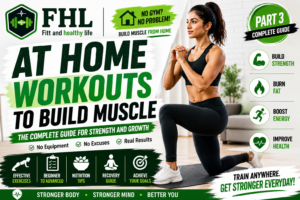
Building muscle doesn’t require an expensive gym membership or fancy fitness equipment. With the right exercises, consistency, and nutrition, at home workouts to build muscle can help you achieve impressive results. Whether you’re a beginner or someone returning to fitness, training at home can be both effective and convenient.
Many people assume that muscle growth only happens in the gym. While gyms offer more equipment, your muscles respond to resistance and progressive overload—not the location where you train. Bodyweight exercises, resistance bands, and a pair of dumbbells can provide enough challenge to stimulate muscle growth.
The biggest advantage of at home workouts to build muscle is flexibility. You can exercise whenever it fits your schedule, save money on memberships, and train in a comfortable environment. With a well-structured workout plan, home training can be just as effective as gym workouts.
In this complete guide, you’ll learn the benefits of home workouts, the best muscle-building exercises, and how to create a routine that delivers real results.
Why Choose At Home Workouts to Build Muscle?
Home workouts have become increasingly popular because they are simple, affordable, and effective.
1. Convenience
You can train whenever you want without traveling to a gym.
2. Cost Effective
No monthly membership fees or expensive equipment are required.
3. Flexible Schedule
Work out early in the morning, during lunch breaks, or in the evening.
4. Privacy
Many beginners feel more comfortable exercising at home while learning proper form.
5. Consistent Training
Since there are fewer barriers, it’s easier to stay consistent with at home workouts to build muscle.
Can You Really Build Muscle at Home?
Yes, absolutely.
Muscles grow when they are challenged. This process is called progressive overload. As long as your muscles experience increasing resistance over time, they can grow stronger and larger.
You can create progressive overload by:
- Increasing repetitions
- Adding sets
- Slowing down movement speed
- Using resistance bands
- Adding dumbbells
- Reducing rest periods
The key is to continually challenge your muscles.
Essential Principles of Muscle Growth
Before starting your workout plan, it’s important to understand how muscle growth works.
Progressive Overload
Gradually increase the difficulty of your workouts.
Proper Nutrition
Muscles need protein and calories to grow.
Recovery
Your muscles grow while resting, not while exercising.
Consistency
Results come from months of regular training.
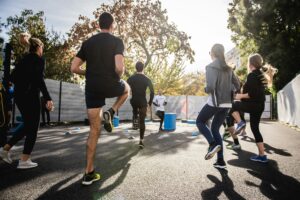
Warm-Up Before Every Workout
Never skip your warm-up.
Spend 5–10 minutes performing:
- Jumping Jacks
- Arm Circles
- High Knees
- Bodyweight Squats
- Leg Swings
- Light Jogging
A proper warm-up prepares your muscles and reduces injury risk.
Best At Home Workouts to Build Muscle
1. Push-Ups
Push-ups are one of the most effective upper-body exercises.
Muscles Worked
- Chest
- Shoulders
- Triceps
- Core
Recommended
3–4 sets × 10–15 repetitions
2. Bodyweight Squats
Squats build lower-body strength and muscle.
Muscles Worked
- Quadriceps
- Glutes
- Hamstrings
Recommended
4 sets × 15 repetitions
3. Lunges
Lunges improve balance and strengthen each leg individually.
Muscles Worked
- Glutes
- Quadriceps
- Hamstrings
Recommended
3 sets × 12 repetitions per leg
4. Plank
A strong core supports muscle growth and overall performance.
Muscles Worked
- Core
- Shoulders
- Lower Back
Recommended
3 sets × 30–60 seconds
5. Glute Bridges
Excellent for strengthening the posterior chain.
Muscles Worked
- Glutes
- Hamstrings
- Core
Recommended
3 sets × 15 repetitions
6. Chair Dips
A simple home exercise for arm development.
Muscles Worked
- Triceps
- Shoulders
- Chest
Recommended
3 sets × 10–12 repetitions
Sample Beginner Muscle-Building Workout
Workout A
- Push-Ups – 3 × 10
- Squats – 3 × 15
- Lunges – 3 × 10 each leg
- Plank – 3 × 30 seconds
Workout B
- Chair Dips – 3 × 10
- Glute Bridges – 3 × 15
- Squats – 3 × 15
- Plank – 3 × 45 seconds
Alternate between these workouts throughout the week.

Tips for Better Results
To maximize your at home workouts to build muscle:
- Focus on proper form.
- Increase repetitions gradually.
- Eat enough protein.
- Stay hydrated.
- Sleep 7–9 hours every night.
- Stay consistent.
Remember, muscle growth takes time. Focus on steady progress rather than quick results.
Complete Weekly At Home Workouts to Build Muscle Plan
A well-structured routine helps you train each muscle group while allowing enough time for recovery.
Monday – Chest & Triceps
Workout
- Push-Ups – 4 × 12
- Incline Push-Ups – 3 × 12
- Chair Dips – 3 × 12
- Diamond Push-Ups – 3 × 10
- Plank – 3 × 45 seconds
Stretch your chest and arms after finishing.
Tuesday – Legs & Core
Workout
- Bodyweight Squats – 4 × 15
- Walking Lunges – 3 × 12 each leg
- Glute Bridges – 3 × 15
- Standing Calf Raises – 3 × 20
- Bicycle Crunches – 3 × 20
- Plank – 3 × 60 seconds
This session builds lower-body strength while improving core stability.
Wednesday – Active Recovery
Recovery is essential for muscle growth.
Choose one activity:
- 30-minute walk
- Light yoga
- Stretching session
- Foam rolling
Keeping your body moving on recovery days improves flexibility and reduces soreness.
Thursday – Back & Shoulders
If you have dumbbells or resistance bands, include them in today’s workout.
Workout
- Resistance Band Rows or Dumbbell Rows – 4 × 12
- Pike Push-Ups – 3 × 10
- Reverse Snow Angels – 3 × 15
- Shoulder Press (Dumbbells) – 3 × 12
- Superman Hold – 3 × 30 seconds
These exercises strengthen your back, shoulders, and posture.
Friday – Full Body Muscle Workout
Workout
- Push-Ups – 12 reps
- Squats – 15 reps
- Lunges – 12 each leg
- Chair Dips – 12 reps
- Glute Bridges – 15 reps
- Plank – 60 seconds
Complete the circuit 3 rounds, resting for one minute between rounds.
Saturday – Strength & Conditioning
Improve endurance while building lean muscle.
Workout
- Jump Squats – 3 × 12
- Burpees – 3 × 10
- Mountain Climbers – 3 × 30 seconds
- High Knees – 3 × 40 seconds
- Side Plank – 3 × 30 seconds each side
Keep your movements controlled and maintain proper form.
Sunday – Complete Rest
Your muscles grow during recovery.
Take the day off, stay hydrated, and prepare for the next week of training.
Advanced At Home Muscle-Building Exercises
Once you’ve mastered the basics, these exercises will help increase the challenge.
Diamond Push-Ups
This variation places more emphasis on the triceps and inner chest.
Benefits
- Builds arm strength
- Improves upper-body definition
- Strengthens the chest
Recommended: 3 sets × 10 repetitions
Bulgarian Split Squats
Use a chair or bench to elevate your back foot.
Benefits
- Improves balance
- Builds stronger legs
- Corrects muscle imbalances
Recommended: 3 sets × 10 repetitions per leg
Pike Push-Ups
A great bodyweight exercise for shoulder development.
Benefits
- Strengthens shoulders
- Builds upper-body stability
- Improves pushing strength
Recommended: 3 sets × 10 repetitions
Superman Hold
This simple exercise strengthens your lower back and improves posture.
Instructions
- Lie face down.
- Lift your arms and legs off the floor.
- Hold the position.
- Lower slowly.
Recommended: Hold for 30–40 seconds.

Nutrition for At Home Workouts to Build Muscle
Training provides the stimulus, but nutrition provides the building blocks for muscle growth.
Eat Enough Protein
Protein repairs muscle fibers after every workout.
Excellent protein sources include:
- Eggs
- Chicken breast
- Fish
- Paneer
- Tofu
- Greek yogurt
- Lentils
- Milk
Aim to include protein in every meal.
Choose Healthy Carbohydrates
Carbohydrates provide the energy needed for intense workouts.
Choose foods such as:
- Oats
- Brown rice
- Sweet potatoes
- Whole wheat bread
- Fruits
- Quinoa
These foods help fuel your training sessions and support recovery.
Healthy Fats
Healthy fats are important for hormone production and overall health.
Include:
- Almonds
- Walnuts
- Olive oil
- Avocados
- Chia seeds
- Flaxseeds
Eat them in moderation as part of a balanced diet.
Stay Hydrated
Water supports muscle performance, recovery, and overall health.
Drink 2–3 liters of water daily, and increase your intake if you’re sweating heavily during workouts.
Recovery Strategies
Muscles don’t grow while you’re exercising—they grow while you recover.
Get Enough Sleep
Aim for 7–9 hours of quality sleep each night to support muscle repair and growth.
Stretch After Every Workout
Stretching helps:
- Improve flexibility
- Reduce muscle soreness
- Increase mobility
- Lower the risk of injury
Spend at least 5–10 minutes stretching after each session.
Allow Recovery Time
Train each muscle group 2–3 times per week and allow at least 48 hours before training the same muscles again.

Common Mistakes to Avoid
Avoid these mistakes to get the best results from your at home workouts to build muscle.
1. Skipping Warm-Ups
Always warm up before exercising to prepare your muscles and joints.
2. Poor Exercise Form
Using incorrect technique reduces effectiveness and increases injury risk.
3. Not Eating Enough Protein
Without enough protein, your muscles won’t recover and grow efficiently.
4. Ignoring Rest Days
Recovery is essential for building strength and muscle.
5. Being Inconsistent
The most effective at home workouts to build muscle are the ones you follow consistently over time.
Tips for Faster Muscle Growth
To maximize your progress:
- Increase repetitions or resistance gradually.
- Focus on compound exercises.
- Track your workouts.
- Eat enough protein every day.
- Stay hydrated.
- Prioritize sleep.
- Be patient and consistent.
Muscle growth takes time, but with dedication and the right routine, you’ll continue to see steady improvements.
Home Workouts vs. Gym Workouts
Many people wonder whether they can build as much muscle at home as they can in the gym. The truth is that both options can be effective if you train consistently and challenge your muscles over time.
At Home Workouts
Home workouts are ideal for people with busy schedules or limited access to a gym.
Benefits
- No gym membership required
- Saves time and money
- Flexible workout schedule
- Comfortable environment
- Great for beginners
- Easy to stay consistent
With bodyweight exercises, resistance bands, or dumbbells, you can perform highly effective at home workouts to build muscle.
Gym Workouts
Gyms provide more equipment and make it easier to increase resistance over time.
Benefits
- Heavy weight training
- More exercise variety
- Access to machines
- Easier progressive overload
- Professional guidance if needed
If your goal is advanced muscle building, the gym offers more training options. However, for beginners and intermediate fitness levels, home workouts can produce excellent results.
Healthy Habits That Support Muscle Growth
Exercise is only one part of building muscle. Your daily habits are equally important.
Eat Enough Protein
Protein helps repair and grow muscle tissue after every workout.
Aim to include protein in every meal.
Good sources include:
- Eggs
- Chicken
- Fish
- Paneer
- Tofu
- Greek yogurt
- Lentils
- Milk
Drink Enough Water
Water supports muscle function, improves workout performance, and speeds up recovery.
Try to drink 2–3 liters of water every day. If you sweat heavily during workouts, increase your water intake.
Sleep 7–9 Hours Every Night
Sleep is one of the most important parts of muscle growth. During sleep, your body repairs damaged muscle fibers and prepares for your next workout.
Lack of sleep can slow muscle growth and reduce your energy levels.
Stay Active Every Day
Even on rest days, keep your body moving.
Simple activities include:
- Walking
- Stretching
- Light yoga
- Cycling
- Taking the stairs instead of the elevator
These habits improve circulation and help reduce muscle stiffness.
How to Stay Motivated
Building muscle takes time, so staying motivated is important.
Set Small Goals
Instead of focusing only on the final result, set smaller goals like:
- Completing four workouts each week
- Doing five more push-ups than last month
- Holding a plank for one minute
- Increasing your squat repetitions
Achieving small goals builds confidence and keeps you motivated.
Track Your Progress
Keep a notebook or use a fitness app to record:
- Exercises completed
- Sets and repetitions
- Weight used (if applicable)
- Body measurements
- Progress photos
Looking back at your progress can inspire you to keep going.
Celebrate Your Achievements
Every improvement is worth celebrating.
Reward yourself when you:
- Complete your first month of workouts
- Increase your strength
- Improve your endurance
- Reach a fitness milestone
Small rewards can help you stay committed to your routine.
Safety Tips
To get the best results from at home workouts to build muscle, always prioritize safety.
Warm Up Before Every Workout
Spend 5–10 minutes preparing your muscles with light cardio and dynamic stretches.
Focus on Proper Form
Correct technique is more important than doing more repetitions.
Good form improves muscle activation and lowers your risk of injury.
Don’t Rush Your Progress
Increase the difficulty of your workouts gradually.
Adding too much resistance too quickly can lead to injuries.
Listen to Your Body
Some muscle soreness is normal, but sharp or severe pain is not.
If something feels wrong, stop exercising and seek advice from a healthcare professional.
Frequently Asked Questions (FAQs)
Can You Build Muscle at Home Without Equipment?
Yes.
Bodyweight exercises like push-ups, squats, lunges, planks, and glute bridges can effectively build muscle, especially for beginners.
How Many Days a Week Should I Work Out?
For most people, 4–5 workout sessions per week are ideal for building muscle while allowing enough time for recovery.
How Long Does It Take to Build Muscle?
Results vary depending on your consistency, nutrition, and recovery.
After 2–4 Weeks
- Increased energy
- Better endurance
- Improved exercise technique
After 6–8 Weeks
- Noticeable strength gains
- Improved muscle definition
- Better posture
After 3–6 Months
- Visible muscle growth
- Increased confidence
- Better overall fitness
Do I Need Supplements?
No.
Most people can build muscle through a balanced diet that includes enough protein, healthy carbohydrates, and healthy fats.
Supplements are optional and should never replace nutritious meals.
Can Women Follow These Workouts?
Absolutely.
At home workouts to build muscle are suitable for both men and women. Strength training helps improve muscle tone, bone health, metabolism, and overall fitness.
Final Thoughts
One of the biggest myths in fitness is that you need an expensive gym membership to build muscle. In reality, at home workouts to build muscle can be incredibly effective when combined with proper nutrition, progressive overload, and consistent effort.
Remember that muscle growth is a gradual process. Focus on improving your technique, challenging yourself over time, and allowing your body to recover. Every workout brings you one step closer to becoming stronger and healthier.
The most important factor is consistency. Even short workouts performed regularly will deliver better results than occasional long workouts.
Conclusion
At home workouts to build muscle are a practical and effective way to improve your strength, build lean muscle, and stay fit without leaving your home. By following a structured workout routine, eating a balanced diet, staying hydrated, and getting enough rest, you can achieve impressive results over time.
Start with beginner-friendly exercises, increase the intensity gradually, and stay patient throughout your fitness journey. Progress doesn’t happen overnight, but every workout contributes to a stronger, healthier version of yourself.
Whether your goal is to gain muscle, improve your fitness, or simply live a healthier lifestyle, home workouts can help you reach your goals. Stay committed, enjoy the process, and celebrate every step forward.